Wonderful Wednesday – Nourish Life
Most people know vitamin C, D and iron.
But there is a group of nutrients that work quietly in the background – and which modern research has linked to cell protection, brain health, energy and aging.
This is something many people walk around with low levels of – without knowing it.
1. Magnesium – the body’s “stabilizer”
Magnesium is involved in over 300 enzymatic processes.
Yet, light deficiency is common.
Affects:
- Sleep quality
- Nervous system (stress, recovery)
- Muscles and heart
- Blood sugar regulation
Interesting:
Low-grade magnesium deficiency is linked in studies to increased inflammation – a central factor in aging.
Available in:
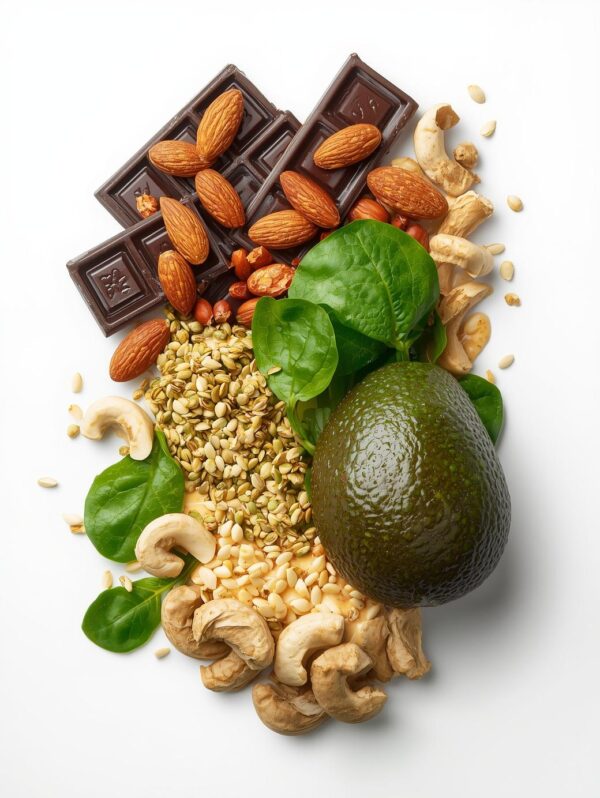
- Pumpkin seeds
- Spinach
- Almonds
- Cocoa
2. Choline – the building block of the brain (often forgotten)
Choline is needed to form acetylcholine, a neurotransmitter for memory and focus.
Affects:
- Cognitive function
- Liver health
- Nervous system
Problem:
Many people do not reach the recommended intake – especially if they avoid eggs.
Available in:
- Eggs (especially the yolk)
- Liver
- Soybeans
3. Omega-3 (EPA/DHA) – anti-inflammatory basis
Not new – but often too low in practice.
Affects:
- Heart and blood vessels
- Brain function
- Inflammation
Newer perspectives:
The balance between omega-6 and omega-3 is crucial.
Modern dietary patterns are leaning heavily in the wrong direction.
Available in:
- Fatty fish (salmon, mackerel, herring)
- Algae (vegan option)
4. Glycine – calm, sleep and cell repair
Glycine is an amino acid that is rarely mentioned – but plays a central role in:
- Nervous system regulation (calm and stress balance)
- Sleep quality and deep sleep
- Collagen and tissue building (skin, joints, tendons)
- Detoxification processes in the liver
- Blood sugar balance and metabolic health
Interesting:
Studies show that glycine can improve deep sleep and recovery.
Available in:
- Bone broth
- Gelatin/collagen
- Meat with connective tissue
5. Potassium – the forgotten mineral
Most people think “banana”.
But potassium is much more than that.
Affects:
- Blood pressure
- Fluid balance
- Nerve and muscle function
Problem:
Many people consume too little potassium and too much sodium → imbalance.
Available in:
- Avocado
- Potato
- Green leaves
- Beans
What does this mean in practice?
Longevity is rarely about “superfoods.”.
It's about not having deficiencies over time.
A simple direction:
- Eat more whole foods
- Vary protein (incl. collagen-rich parts)
- Prioritize minerals, not just vitamins
- Think balance, not perfection
A simple Wednesday check (saveable)
- Have I eaten anything green today?
- Have I been getting quality protein?
- Have I covered minerals (magnesium/potassium)?
- Have I supported the brain (omega-3/choline)?
Termination
The body works silently.
But it responds exactly to what you give it – every day.
Small, consistent adjustments in nutrition are one of the most reliable paths to long-term energy, clarity, and sustainable health.